Kole Tang Care Guide: The Best Tang for Smaller Reefs?
October 27, 2026
Is the Kole Tang a good fish for beginners?
Yes, the Kole Tang (Ctenochaetus strigosus) is rated a beginner-level care fish, making it one of the more accessible tangs available to new saltwater aquarists. That accessibility, combined with a maximum adult size of 7 inches and a genuine appetite for film algae and detritus, makes it a practical and functional addition rather than just a display piece. If you have been looking for a tang that earns its keep in the tank without demanding expert-level husbandry, the Kole Tang belongs near the top of your shortlist.
What exactly is a Kole Tang and who should keep one?
The Kole Tang is a marine, reef-safe herbivore in the bristletooth tang family. Its scientific name, Ctenochaetus strigosus, places it in a group of tangs specifically built for grazing. Where many popular tangs focus on macroalgae, the Kole Tang is notably effective at removing film algae and detritus from rock surfaces, which is exactly the kind of low-visibility buildup that frustrates reef keepers who think they are doing everything right.
This fish is widely considered underrated. It is less aggressive than other tangs in the hobby, and it is a great choice for smaller systems of 55 gallons and above, where a Yellow Tang might dominate and stress out other inhabitants. For a beginner-to-intermediate aquarist setting up their first reef or fish-only-with-live-rock system, the Kole Tang fills a biological role that few other fish can match at this care level.
What tank size and water parameters does a Kole Tang need?
Because Ctenochaetus strigosus reaches up to 7 inches as an adult and is an active grazer, giving it adequate space is important. The care notes specifically identify 55 gallons as the floor for this species, so anything smaller than that should not be considered.
Water quality is where reef keeping lives or dies, and the Kole Tang does best within the following ranges pulled directly from its care profile.
- Temperature: 72 to 82 degrees Fahrenheit
- Salinity: 1.023 to 1.027 specific gravity
- pH: 8.1 to 8.4
These parameters align with standard reef-system targets, so if you are already keeping corals or other reef-safe fish, your existing maintenance routine should not need significant adjustment. Consistent water quality matters more than hitting a specific number on any single day. Swings in temperature or salinity are harder on fish than stable readings at the edge of a range, so invest in reliable monitoring equipment and test regularly.
Ample live rock is not just decorative here. Because the Kole Tang grazes film algae and detritus from rock surfaces, a well-established rockscape gives the fish natural foraging territory throughout the day. A bare or sparse aquascape will leave this animal without the biological work it is built to do.
What do Kole Tangs eat and how do you feed one?
The Kole Tang is an herbivore. Its diet in an aquarium setting centers on film algae, detritus, nori, and pellets. The film algae and detritus component is something the fish will largely manage on its own as it patrols the rockwork, which is one of the reasons reef keepers value it so highly as a cleanup contributor.
For supplemental feeding, offer nori (dried seaweed sheets) clipped to a feeding clip and fixed to the glass or rock. This gives the fish extended grazing time and ensures it is getting enough plant matter even in systems where natural algae growth is limited. Pellets formulated for herbivores round out the diet and help cover nutritional bases that pure algae grazing might not fully address.
A few practical feeding notes for beginners.
- Attach a nori clip somewhere the fish can reach easily without competing with aggressive eaters.
- Feed small amounts multiple times per day if your schedule allows, mirroring the constant low-level grazing this species does in nature.
- Do not skip supplemental feeding and assume the rock alone will carry the fish. Even in mature systems, consistent nori offerings are good practice.
- Observe the fish during feeding to confirm it is actually eating and not being crowded out by tankmates.
Because this is a beginner-rated species, its feeding behavior is generally straightforward. Most Kole Tangs adapt to prepared foods without extended acclimation periods.
How does the Kole Tang behave with other fish?
The Kole Tang is listed as semi-aggressive. In practice, that label means something specific: this fish is peaceful toward non-tang tankmates but may fight with other bristletooth tangs. Understanding that distinction is key to planning a compatible community.
If your tank includes other fish that are not tangs, the Kole Tang is a calm and manageable neighbor. Reef-safe fish that occupy different feeding niches and swim in different parts of the water column will generally coexist without incident. The semi-aggressive label applies almost entirely to territorial conflicts with related species.
Where things get complicated is when another bristletooth tang enters the picture. Because Ctenochaetus strigosus will fight with members of its own genus group, keeping two bristletooth tangs in the same system requires careful planning and, in most cases, a much larger tank than the 55-gallon minimum this species already requires. For most beginner setups, keeping only one bristletooth tang is the safest approach.
The care notes also flag that the Kole Tang is a great choice for smaller systems where a Yellow Tang would dominate. This implies a compatibility advantage in mixed-tang scenarios involving more aggressive species. The Kole Tang's lower aggression means it is less likely to be the initiator of conflict, though it can still defend itself and its grazing territory.
Reef compatibility is a strong point. This fish is confirmed reef safe, meaning corals, invertebrates, and the typical organisms in a reef environment are not at meaningful risk from its presence.
Common beginner mistakes to avoid with Kole Tangs
Even a beginner-rated fish can suffer from preventable errors. These are the issues that come up most often.
- Putting it in a tank under 55 gallons. The care profile sets 55 gallons as the starting point. A smaller system will not give a 7-inch adult enough room or enough rock surface to forage properly.
- Skipping supplemental feeding. Film algae and detritus alone may not sustain the fish long-term. Nori and pellets are listed as part of the diet for a reason.
- Adding a second bristletooth tang. The compatibility notes are clear. Fighting between bristletooth tangs is a real risk, and a beginner system rarely has the space or structure to reduce that conflict.
- Ignoring water parameter stability. The temperature range of 72 to 82 degrees Fahrenheit and pH range of 8.1 to 8.4 are wide enough to manage, but swings between those extremes are stressful. Stable parameters beat wide ranges every time.
- Undervaluing its role. Because the Kole Tang is calm and spends most of its time quietly grazing, beginners sometimes overlook signs that it is not thriving. Watch its behavior and body condition regularly.
Frequently asked questions about the Kole Tang
Is the Kole Tang reef safe?
Yes, the Kole Tang is confirmed reef safe. It will not bother corals or typical reef invertebrates, and its grazing habit actively benefits the rockwork by removing film algae and detritus.
How big does a Kole Tang get?
The Kole Tang reaches a maximum adult size of 7 inches. This is why the care profile sets 55 gallons as the minimum tank size for keeping one comfortably.
Can I keep two Kole Tangs in the same tank?
The compatibility notes flag that this species may fight with other bristletooth tangs. Keeping two Kole Tangs together carries a meaningful risk of aggression, and for most beginner setups it is not recommended.
What temperature does a Kole Tang need?
The Kole Tang thrives in water between 72 and 82 degrees Fahrenheit. Keeping the temperature stable within that range is more important than targeting any single point in it.
Is the Kole Tang hard to care for?
The Kole Tang is rated as a beginner-level care fish, which places it among the more forgiving options in the saltwater hobby. Its main requirements are adequate tank size, consistent water parameters, and regular access to algae-based food.
Track your Kole Tang's parameters, feeding schedule, and tankmate history in one place at TankMind, built for aquarists who want their data as organized as their reef.
Want to keep your own tank steady? Track your parameters free with TankMind.
If this was useful, this tells Google to surface TankMind more often in your Search results.
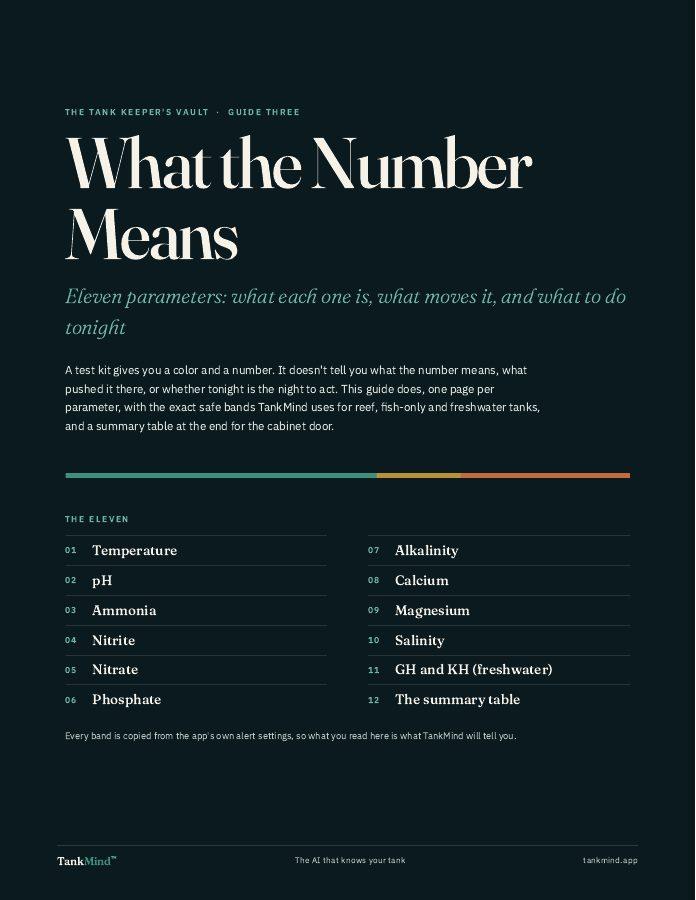
What the Number Means
Eleven parameters: what each one is, what moves it, and what to do tonight
Get the free guideStart your free tank log