Moving an Established Tank Without Losing the Cycle
October 14, 2026
How Do I Move an Established Aquarium Without Losing the Cycle?
Move your established filter media to the new tank, keeping it continuously submerged in aged tank water throughout the entire process, and your biological filtration capacity moves with it. That single step is the core of a successful tank move. Everything else, how you handle the fish, how much old water you save, how you inspect the tank afterward, is important but secondary to that one rule.
Why Your Filter Media Is the Whole Game
Nitrifying bacteria live primarily on filter media and other solid surfaces inside the aquarium, not in the water column. The sponges, rings, bio-balls, live rock, and ceramic media inside your filter are densely colonized with the bacteria that convert toxic ammonia to nitrite and then to less harmful nitrate. Moving that media is, functionally, moving your cycle.
This surprises many keepers who assume saving old tank water is what preserves the cycle. Saving old water is genuinely useful, but for a different reason. Reusing roughly 75 to 80 percent of your old tank water lowers fish stress, preserves established water chemistry, and reduces the volume of fresh dechlorinated water you need to top off the new setup. The bacterial benefit of the water itself is minimal. The chemistry and temperature stability benefit to your fish is real, so save the water, just do not rely on it to carry your cycle.
What Kills Nitrifying Bacteria During a Move
Nitrifying bacteria are strictly aerobic organisms. They require dissolved oxygen to function, and their activity stops at roughly 2 to 3 mg/L of dissolved oxygen or below. They are also sensitive to temperature drops. Nitrification rates fall by roughly 50 percent at 64 degrees F (18 degrees C) and by roughly 75 percent at 46 to 50 degrees F (8 to 10 degrees C). The bacteria die at freezing (32 degrees F, 0 degrees C) and are also killed by prolonged exposure above 95 to 120 degrees F (35 to 49 degrees C).
The second critical threat is drying. Nitrifying bacteria cannot form spores and cannot survive any drying process. If your filter media dries out even partially during the move, the colony on those surfaces dies. Kept wet and submerged in tank water, the colony can survive roughly 12 to 24 hours without active water flow, and in some conditions, particularly if there is some surface agitation in the container, survival may extend considerably longer.
The third threat is tap water. Never rinse or store your filter media in tap water. Chlorine and chloramine, which are present in virtually all municipal water supplies, kill nitrifying bacteria on contact.
Step-by-Step: How to Move Your Tank and Preserve the Cycle
Before moving day
Do not feed your fish for one to two days before the move. This reduces ammonia buildup in transport containers from waste, which protects your fish during the journey.
Packing the filter media
Remove all biological media from your filter and place it immediately into a sealed container or bag filled with aged tank water drawn directly from your tank. The goal is to keep every surface submerged and at the tank's normal temperature throughout the move. If you can fit a small battery-powered air pump into the container to provide gentle surface agitation, that helps maintain dissolved oxygen around the media.
Saving old tank water
Drain 75 to 80 percent of the tank water into capped 5-gallon buckets. Label them clearly. These buckets go into the vehicle last and are the first thing poured back into the tank at the new location. If your move involves cold weather or a long drive, keep the buckets in the passenger area of the vehicle where temperature is controlled.
Substrate handling
If your move is short and logistics allow, keeping the substrate wet in tank water during transport helps preserve the nitrifying bacteria that colonize it as well. Dry substrate loses its bacterial colonies.
Moving the empty tank
The aquarium must be completely empty of water and substrate before you lift it. Moving a tank with any water inside shifts the weight dynamically, stresses the silicone seams and glass panels in ways the tank was not designed to handle, and can cause frame twisting, seam separation, or stress fractures. Some of these failures do not appear until the tank is refilled at the new location. This applies to both glass and acrylic tanks and is the reason professional moving companies will not transport a filled aquarium.
Once the tank is set up at the new location and refilled, inspect every seam carefully for leaks before introducing any fish. Even tanks that were previously sound can develop seam leaks after transport because lifting and movement can partially separate silicone joints without leaving any visible crack when the tank is dry.
Transporting fish
For short moves of up to a few hours, fish can travel in sealed bags filled roughly one third with tank water and two thirds with air. Double the bags to prevent punctures, and lay them on their sides to increase swimming space and contact between the water and the air pocket. Place the bags in a cooler or Styrofoam box to maintain temperature and reduce light stress.
For longer moves, sealed bags with atmospheric air may become insufficient as dissolved oxygen is depleted. For longer-distance transport, buckets or tubs with lids and a battery-powered air pump provide more oxygen and allow you to monitor water quality along the way.
What to Expect After the Move: The Mini-Cycle
Even when you do everything correctly, expect a temporary and usually modest rise in ammonia or nitrite in the days following the move. This is called a mini-cycle, and it is a normal part of moving an established tank. The disruption of removing substrate, temporarily stopping the filter, and reassembling everything stresses the bacterial colony and leaves it smaller and less active than before.
Test your ammonia, nitrite, and nitrate before reintroducing fish, and then test daily or every few days for at least one to two weeks. Safe parameters after the move are 0 ppm ammonia and 0 ppm nitrite. Nitrate is far less harmful and is managed through routine water changes. If ammonia or nitrite rises, perform a partial water change of 20 to 30 percent immediately and continue testing daily until readings return to zero.
Signs of ammonia or nitrite stress in fish include rapid or labored breathing, clamped fins, lethargy, hiding, and erratic swimming. Any of these after a move is a signal to test immediately and act on what you find.
The mini-cycle typically resolves on its own as the bacterial colony recovers. In cases where the colony was significantly disrupted, recovery can in some situations take several weeks, so consistent testing is important even after the first few days look clean.
Frequently Asked Questions
Can I save tank water instead of moving the filter media?
Saving old tank water is worthwhile for water chemistry stability and reducing fish stress during the transition, but it does not preserve the cycle. Nitrifying bacteria live on solid surfaces such as filter media, not in the water column, so moving the media is what transfers your biological filtration.
How long can my filter media survive without being in the filter?
Wet and submerged in tank water, nitrifying bacteria on filter media can survive roughly 12 to 24 hours without active water flow. Keeping the container at the tank's normal temperature and providing some surface agitation can help extend that window. Media that dries out even briefly will lose its bacterial colony, because nitrifying bacteria cannot survive desiccation.
Do I need to cycle the tank again after moving?
Not from scratch, provided you kept the media wet in tank water throughout the move. However, a temporary mini-cycle is common and expected even in the best-case scenario. Test ammonia and nitrite daily for one to two weeks and perform small partial water changes if either reading rises above zero.
Can I move my tank with water still in it?
No. An aquarium must be completely empty before it is moved. Water shifts dynamically during transport, placing stresses on the silicone seams and glass panels that the tank was not engineered to handle. Seam failures sometimes appear only after the tank is refilled at the new location. Always drain the tank fully before lifting it.
Should I add a bottled bacteria product after the move?
Some keepers use bottled nitrifying bacteria products after a move as extra insurance during the recovery period. Results vary and evidence is mixed, but adding one is unlikely to cause harm. The most important step remains keeping your filter media wet in aged tank water from start to finish.
If you want to take the guesswork out of where your tank stands right now, TankMind's /diagnose tool can help you identify what your actual water readings mean and what to do next.
Want to keep your own tank steady? Track your parameters free with TankMind.
If this was useful, this tells Google to surface TankMind more often in your Search results.
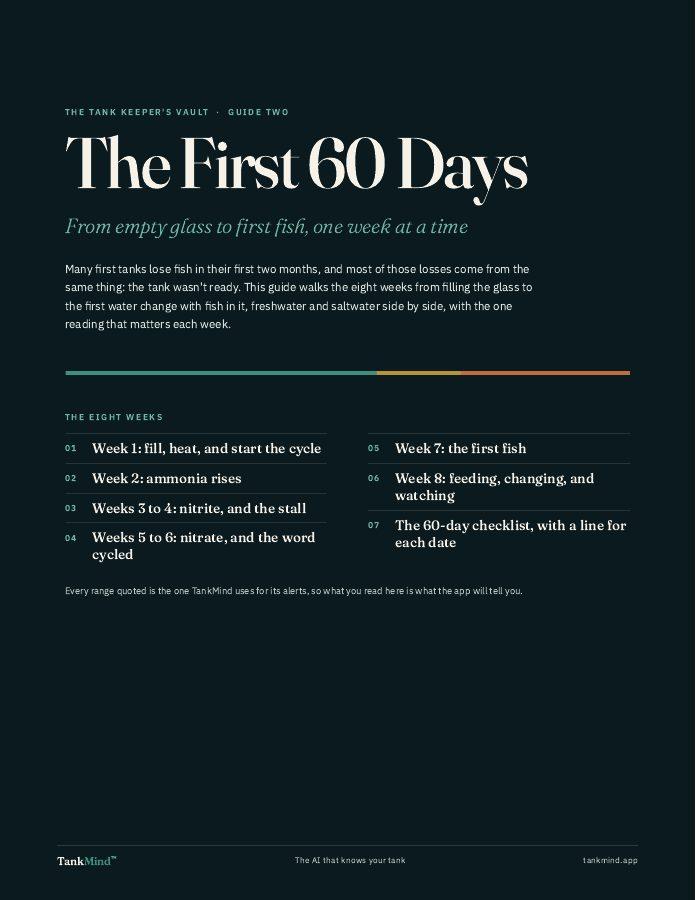
The First 60 Days
From empty glass to first fish, one week at a time
Get the free guideStart your free tank log